Generator Architecture
The automatic generator is organized as a reuse hierarchy rather than as a collection of independent layout scripts.
Complex analog modules reuse lower-level physical constructions and add only the placement and routing policies required by their circuit topology.
Reuse Hierarchy
Primitive Level
MOS device primitive
Local active region, multifinger gate structure, contacts/vias, and terminal
access.
MIM capacitor primitive
Passive capacitor construction with explicit plate terminals.
Basic Structure Level
- single device;
- shared-diffusion interdigitation;
- split-diffusion interdigitation;
- common-centroid array.
Compound Module Level
- simple current mirror;
- differential pair;
- cascode current mirror;
- wide-swing current mirror;
- Wilson current mirror;
- improved-Wilson current mirror;
- cascoded differential pair;
- MIM capacitor module.
Generated Module Examples
MOS-Based Modules
The MOS-based generator hierarchy reuses the common device primitive through single-device, interdigitated, common-centroid, and compound structures.
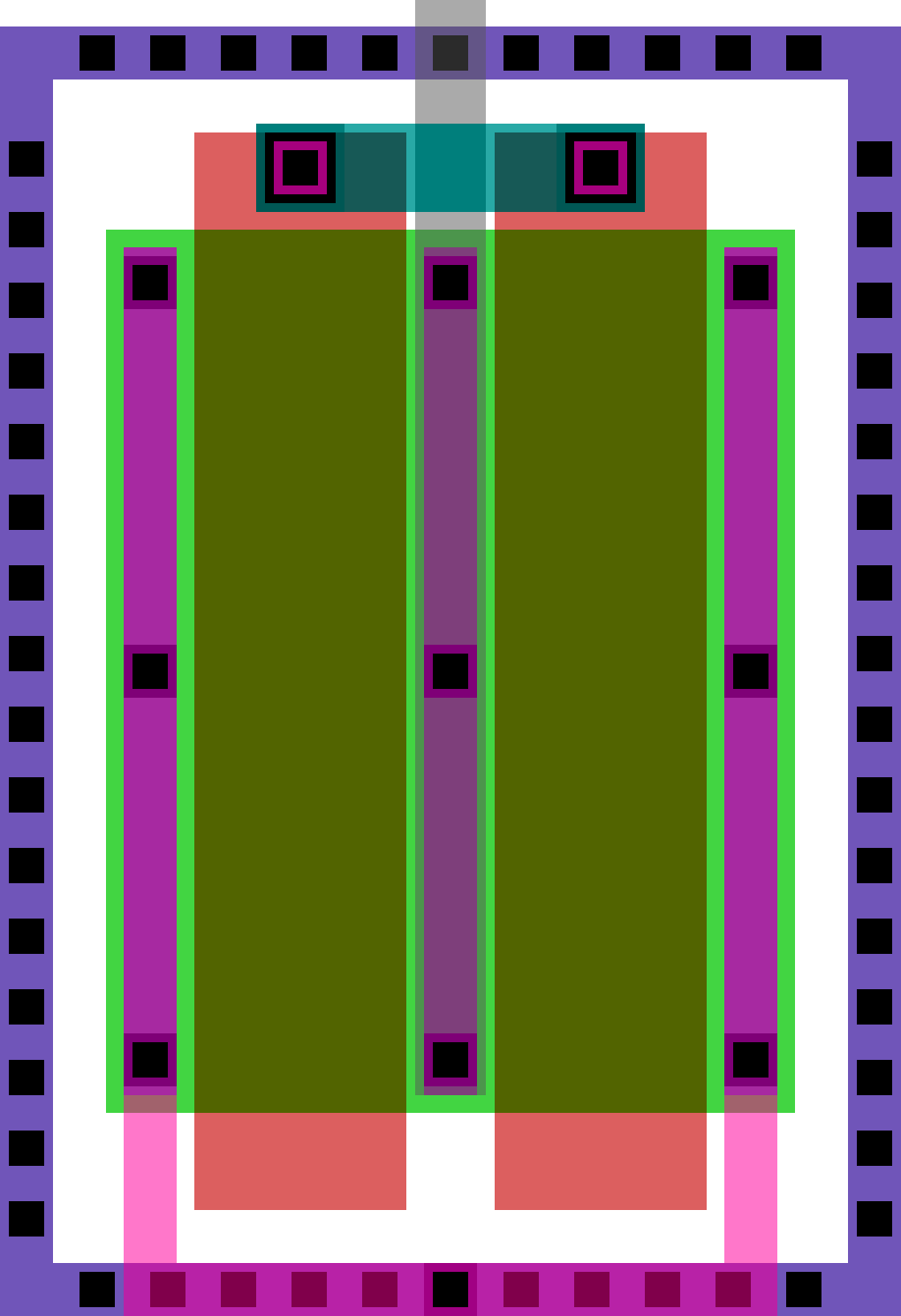
Single MOS. Reusable device construction and local terminal access.
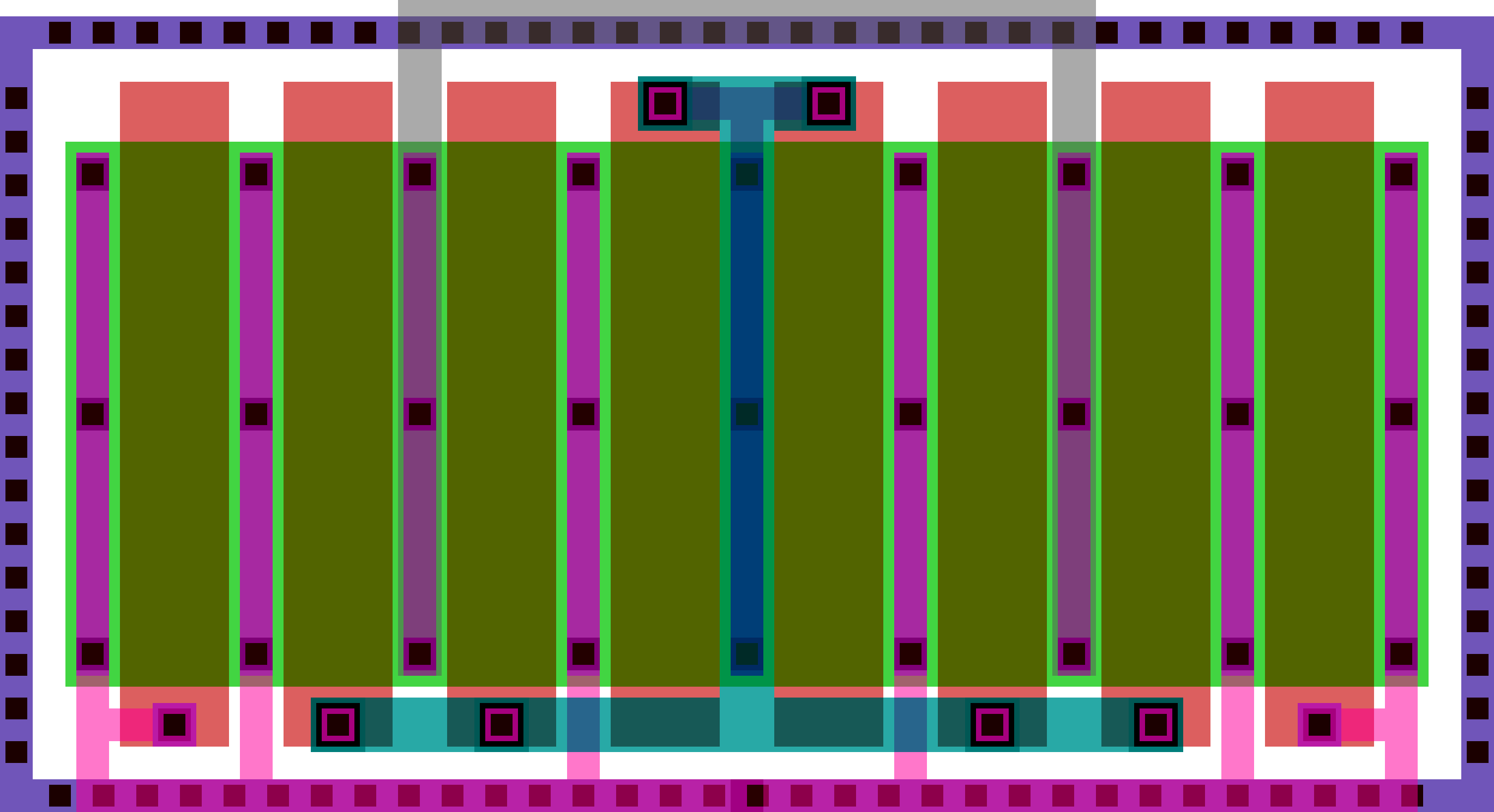
Simple current mirror. Shared-diffusion interdigitation with dummies, local diode connection, and gate sharing.
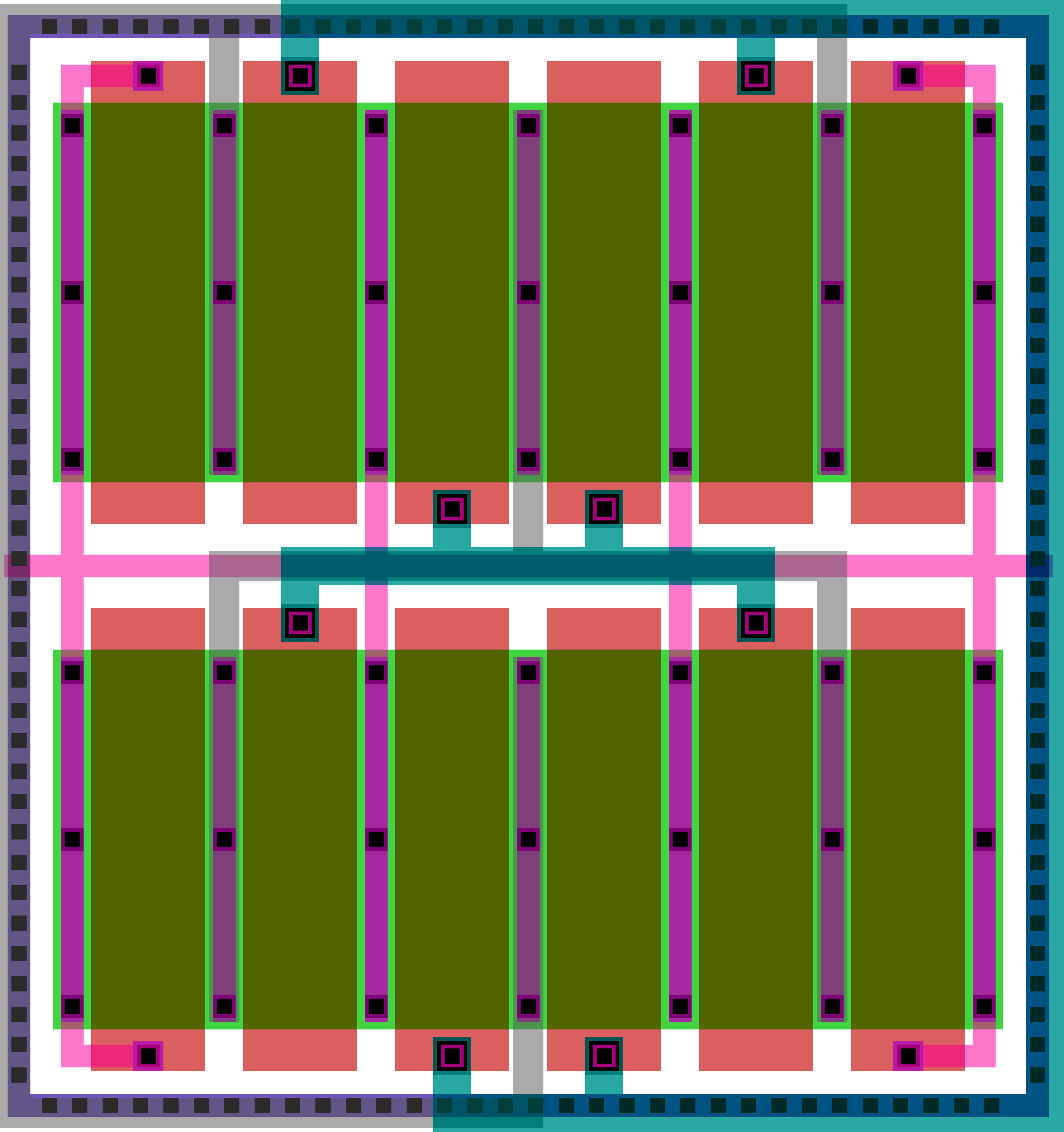
Differential pair. Common-centroid placement with local dummies and pair-specific access.
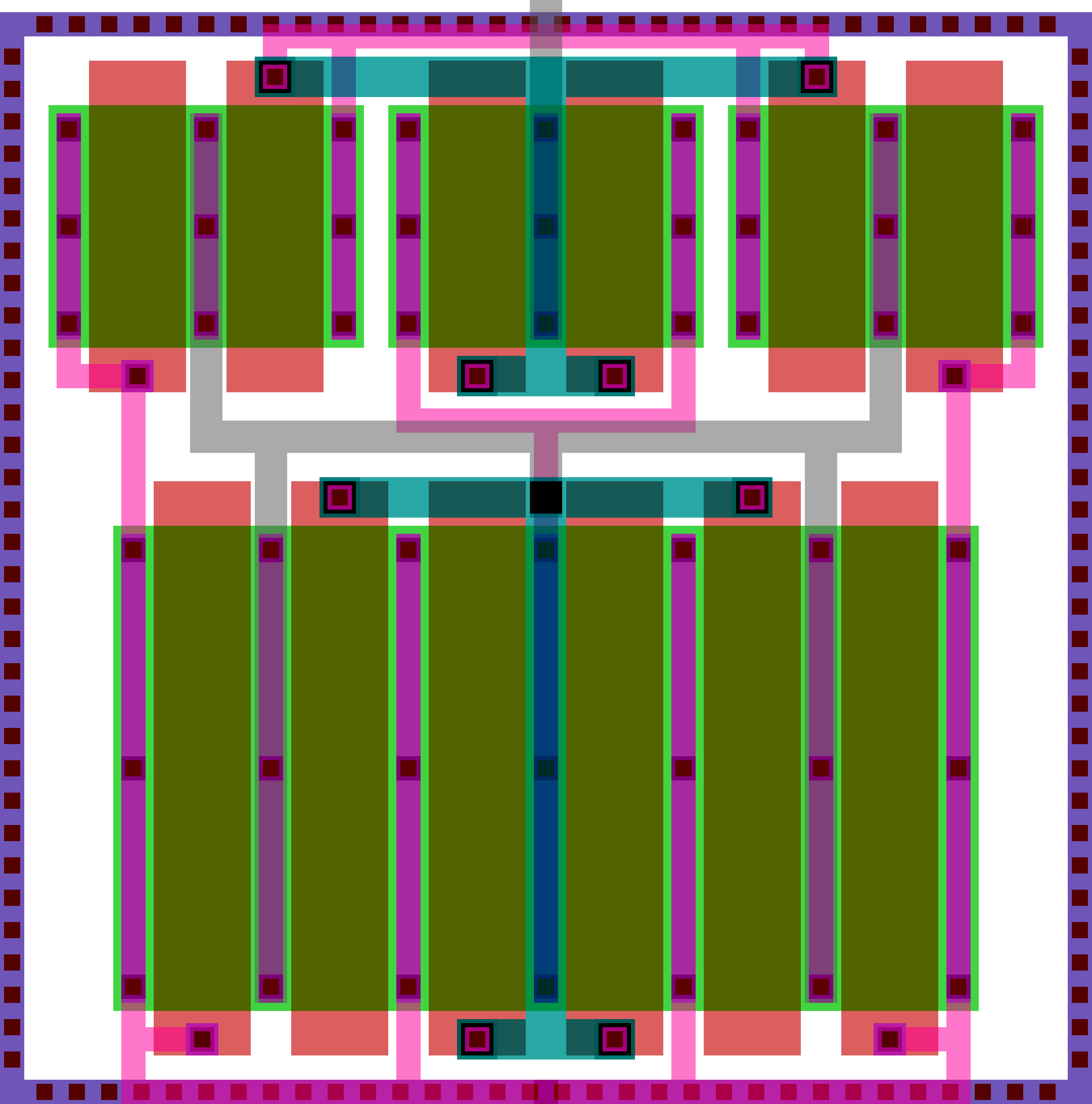
Cascode current mirror. Compound structure assembled from reusable matched rows.
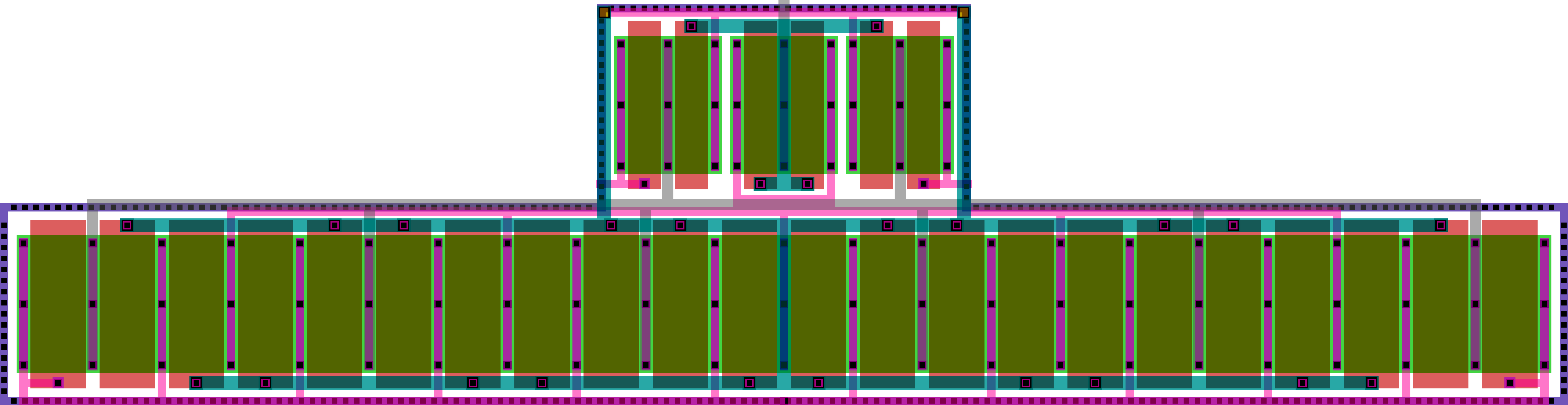
Wide-swing current mirror. Shared and source-isolated row structures with topology-specific routing.
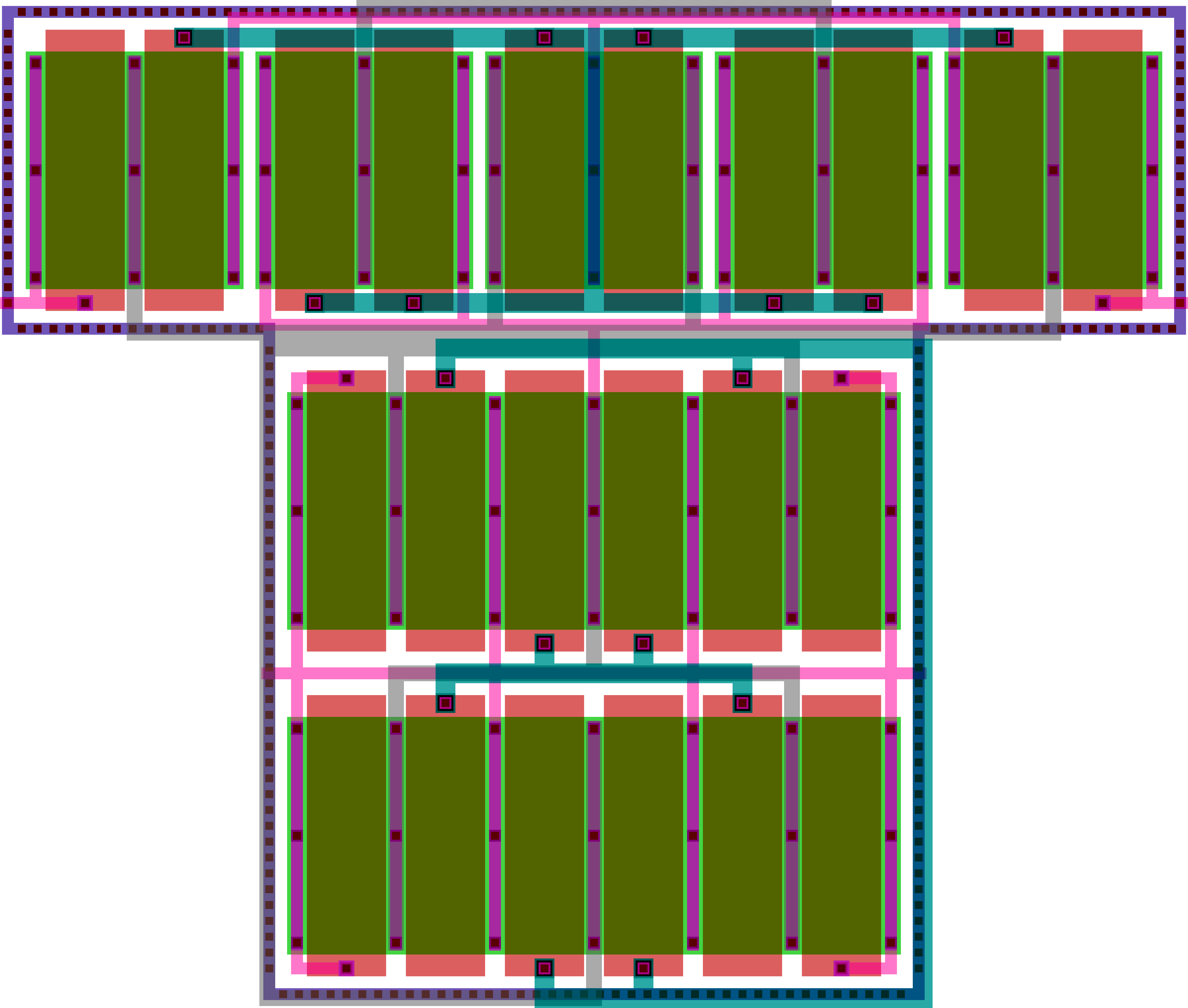
Cascoded differential pair. A common-centroid input array combined with a split-diffusion cascode row.
Passive Module
The capacitor generator forms a separate passive branch. It uses a MIM capacitor primitive rather than the MOS-device construction, while exporting the same type of module interface for top-level integration.

MIM capacitor. Simplified passive module with explicit plate access for top-level integration.
Internal Closure
Local analog structure remains inside the generated child cell.
The generator is responsible for:
- device-finger ordering;
- dummy-device insertion;
- local gate and drain/source buses;
- diode connections;
- internal stack-node connections;
- topology-specific local routing;
- local guard-ring construction where required.
The top-level flow does not reconstruct these structures.
Instead, each module exports a compact interface describing the information needed by downstream physical-design stages.
Public Generator Coverage
The prototype includes selected generator families covering:
- single MOS devices;
- two- and three-branch simple current mirrors;
- two- and three-branch cascode current mirrors;
- Wilson current mirrors;
- improved-Wilson current mirrors;
- wide-swing current mirrors;
- differential pairs;
- cascoded differential pairs;
- MIM capacitors.
The generator library is a prototype rather than a complete layout synthesis library for arbitrary analog topologies.
Why Reuse Matters
The central implementation idea is not merely that several circuit topologies can be drawn automatically.
The same low-level layout construction is reused across different families. The family-specific behaviour is concentrated in:
- row organization;
- diffusion-sharing policy;
- dummy policy;
- relative placement;
- local buses;
- guard-ring policy;
- topology-specific routing.
This reduces duplicated layout logic and keeps related module families physically consistent.